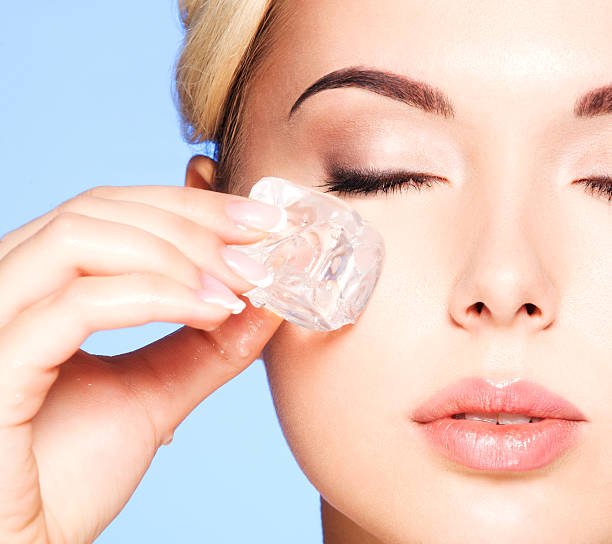
reduce puffiness

The Skin-Care Benefits of Ice-Rolling , Explained. Ready to roll?

You’ve seen the roll-and-go tools all over Instagram, but what exactly do ice rollers do for the skin?

Designed to be chilled to deliver a cooling, tightening effect to the skin, the simple, hand-held tool is the best known for its ability to quickly de-puff a tired complexion. But as skin experts explain, the trending tool offers a host of other legitimate skin-care benefits, too.

What are the benefits of ice-rolling?

Ice rollers stimulate the lymphatic system and massage the face to get rid of puffiness and toxins, stimulate blood flow and reduce muscle tension. Anything ‘Cryo’ is anti-inflammatory, meaning it will slow the effects of aging, speed up healing and can stimulate collagen production.

Even better, the cooling action of the tool also allows for refreshed, brighter-looking appearance. Ice rollers may also help constrict blood vessels, thus decreasing inflammation and reducing the appearance of broken capillaries.

How do you use an ice roller?

Begin from the center of your face and use upward, outward strokes to roll the tool along the skin, making sure to apply just enough pressure to massage the skin, as using too much pressure can cause irritation. To de-puff the under-eyes, gently roll the tool along the area, applying little to no pressure.

When is the best time to use an ice roller?

Barring a couple of exceptions- more on that below- you can ice roll whenever you’d like. Reaching for your ice roller as the last step of your skin-care routine is always a good idea. I recommend using your ice roller to help spread products to all ares of your face. For example, you can apply a moisturizer or serum to your face and then use your ice roller to spread the product to under eyes, forehead, temples, cheeks, etc. Massaging the face with your ice roller can help the topical product absorb into the skin.

Can you use an ice roller after injections?

You should not use an ice roller after injections or filler because the facial roller can allow the products to spread into unwanted areas. Likewise, ice-rolling should be avoided after any surgery that leaves a wound because if healing tissue is moved, scarring could be worsened.

How do you clean an ice roller?

To ensure your roller isn’t harboring any bacteria, be sure to give it a quick wipe down with a cotton pad soaked in rubbing alcohol or with mild soap and water after each use. Before popping it back in the freezer or fridge to chill, place it in a separate bag or container to keep it free from contamination.

What is the best ice roller?

The Skinny Confidential Hot Mess Ice Roller($69)

Aceology Ice Globe Facial Massager($64)

Taste Sea Cryo Tool($15)

Esarora Ice Roller($13)

BeautyBio Cryo Icing Dual-Ended Roller($85)

What is a Jade roller and should I be using one?

by Minx life

by Minx life

While jade rollers are having their moment in the spotlight right now, they have been a staple in Chinese skincare routines since the 7th century. You can think of them as handheld mini face massagers. They can be made of beautiful green jade or pink quartz(pictured above), and are believed to have healing and protective properties for the skin, including boosting circulation, reducing swelling, and allowing for deeper penetration of skincare products.

The most well-known benefits of using a jade roller include reducing inflammation and puffiness of the skin, reducing the appearance of under eye circles(especially if your roller is cold), stimulating the lymphatic system and blood circulation, brightening complexion, tightening pores, helping reduce the appearance of fine lines, and allowing skincare products to penetrate more deeply. Aside from these benefits, it’s a lovely way to relax and get in “bedtime” mode after your evening skincare routine.

You can pretty much search for jade rollers on Amazon and find a slew of options with all different price points, although we feel strongly that an inexpensive jade roller will do the trick. Give it a try!

5 Unexpected Health promoting Benefits of Yoga
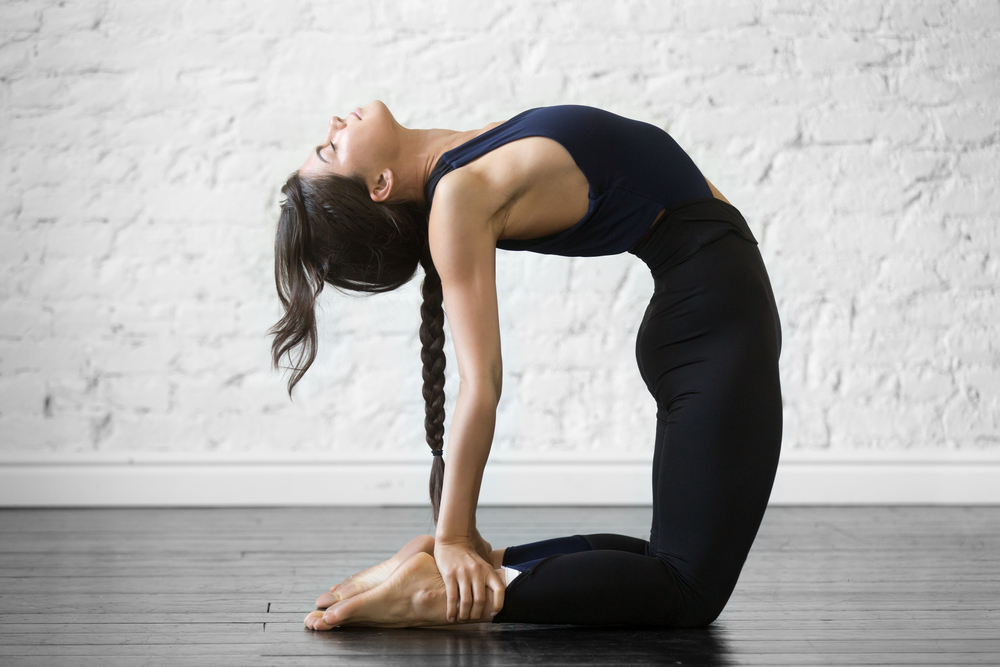
by Minx life

by Minx life

From relieving stress to boosting your brain power, here’s how yoga can improve not just your strength but your well-being, too.

For 5,000 years, hardcore yoga practitioners have been touting yoga’s mental and physical powers. Luckily, you don’t have to be an expert to reap the benefits- adding just a few poses to your daily routine can help your health in all kinds of unexpected ways.

On a physical level, yoga helps improve flexibility, strength, balance, and endurance. On an energetic level, yoga teaches you how to cope better with stress by cultivating a sense of ease in both active and passive poses. On a psychological level, yoga helps to cultivate mindfulness by shifting your awareness to the sensations, thoughts, and emotions that accompany a given pose or exercise.

Research continues to unearth even more health-boosting benefits of various types of yoga- and here are 5 of them.

Emotional Health Boost

All exercise has been shown to help people with depression to feel better, and yoga is no exception. Studies suggest that yoga could benefit those living with depression, schizophrenia, other psychiatric conditions, and sleep problems.

Practicing in a group setting, such as a yoga class, stimulates the production of oxytocin, the love and bonding hormone. Practicing mindfulness through yoga and meditation also results in higher serotonin levels(the happiness hormone), and long-term practitioners have shown more mass in the ares of the brain associated with contentment.

Back Pain Treatment

Multiple studies have found yoga to be a more effective treatment for chronic back pain than usual care. In a study published in the Annals of Internal Medicine, people living with chronic lower back pain reported better back function, though similar levels of pain, after a few months pf practicing yoga.

In another study of 80 individuals with chronic lower back pain, the group that participated in just one week of yoga showed less disability and greater flexibility than patients who completed other physical exercises. Even if you don’t have chronic pain, yoga’s stretching exercises can improve your spinal flexibility.

Hangover Relief

After a night of drinking, yoga may be the last thing on your mind, but it’s exactly what you should do.

Yoga is a great way to detox your entire system. It also helps with metabolism. The poses 'shoulder stand’, ‘plow’, and ‘fish’ work on the thyroid gland and improve metabolism, thus getting rid of a hangover faster. Reversing blood flow and bringing more blood to the brain creates balance in the body. It helps you burn fat, and the increased blood flow from yoga might even help blast cellulite away!

Arthritis Fighter

When it comes to the benefits of different types of yoga, a study indicated that iyengar yoga, known for it’s use of props like belts, blocks, and other positioning aids, might help people with rheumatoid arthritis. This pilot study of eight people with RA showed that a six-week yoga program improved pain, pain disability, mental health, depression, vitality, and self efficacy. Other types of yoga might help arthritis symptoms, too. Arthritis loves gentle movement and heat, so styles like bikram or gentle yoga can be very beneficial.

Insomnia Buster

According to a recent study that looked at several complementary and alternative medicine strategies for treating insomnia, yoga was one of the most effective approaches for getting a good night’s sleep.

When experiencing insomnia, practice relaxing asanas or postures, such as forward fold (uttanasana) or lying on your back with your feet up the wall. This will help with circulation as well as calming your body and, most importantly, your mind.

Give it a try!!!